Any number of supports and any number of fields
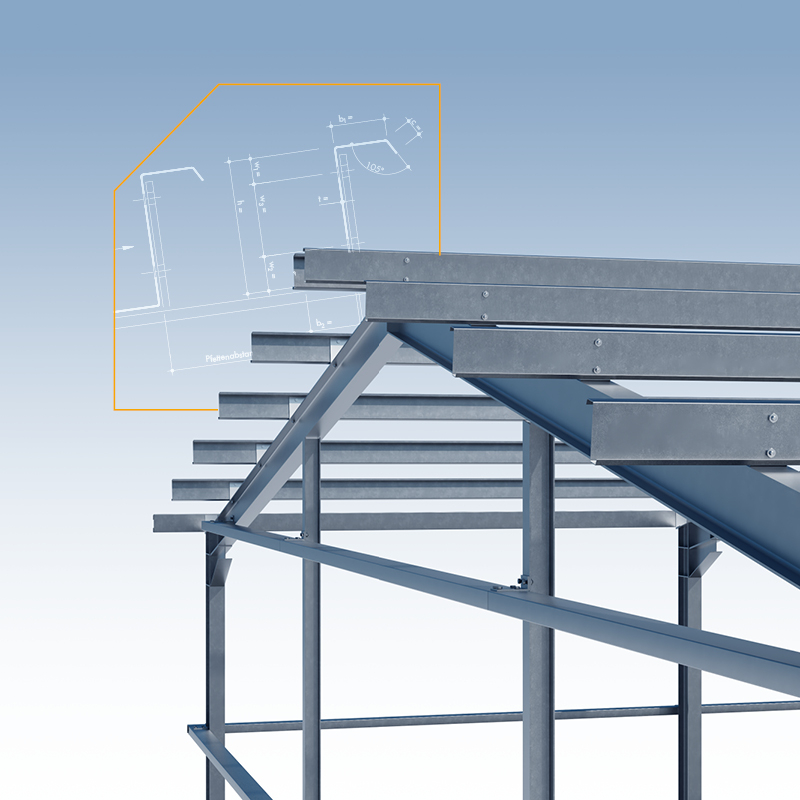
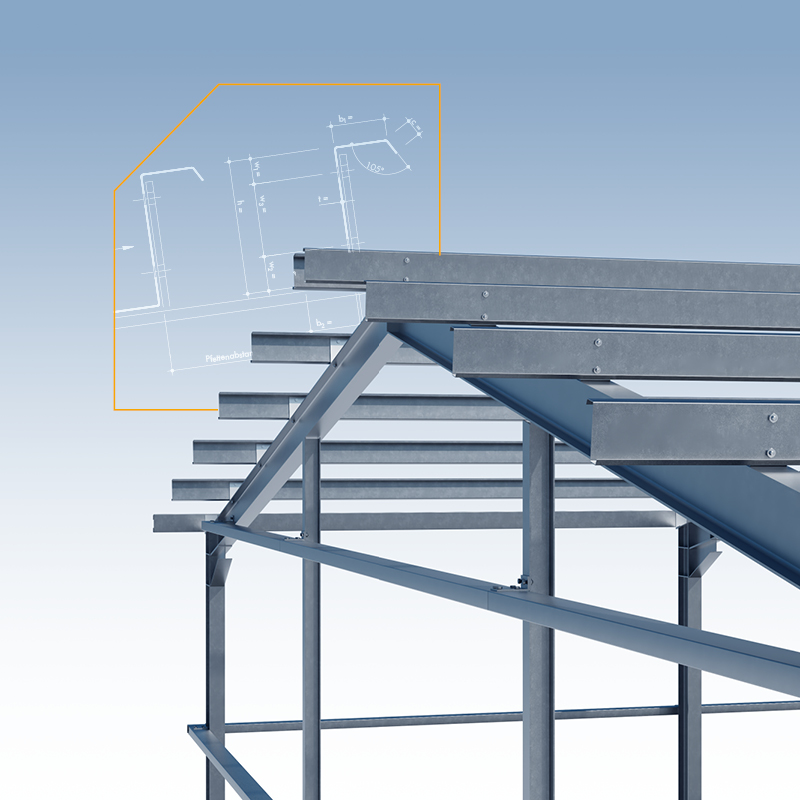
From experience, we know very well what our customers value. In modern lightweight metal construction, our purlin systems are a cost-effective alternative to conventional hot-rolled profiles. Optimised shaping of the steel purlins ensures that transport and assembly costs are minimised in addition to weight reductions. The safety with which we work offers our customers a high level of comfort. We consider the combination of expertise, safe processes and modern machinery, as well as the networking of the four SCHRAG business areas, to be the basis of our competence. For example, we manufacture high-quality purlin systems with the necessary flexibility. A look at the details illustrates our understanding of quality.
Effects on uniform load, roof load and support geometry
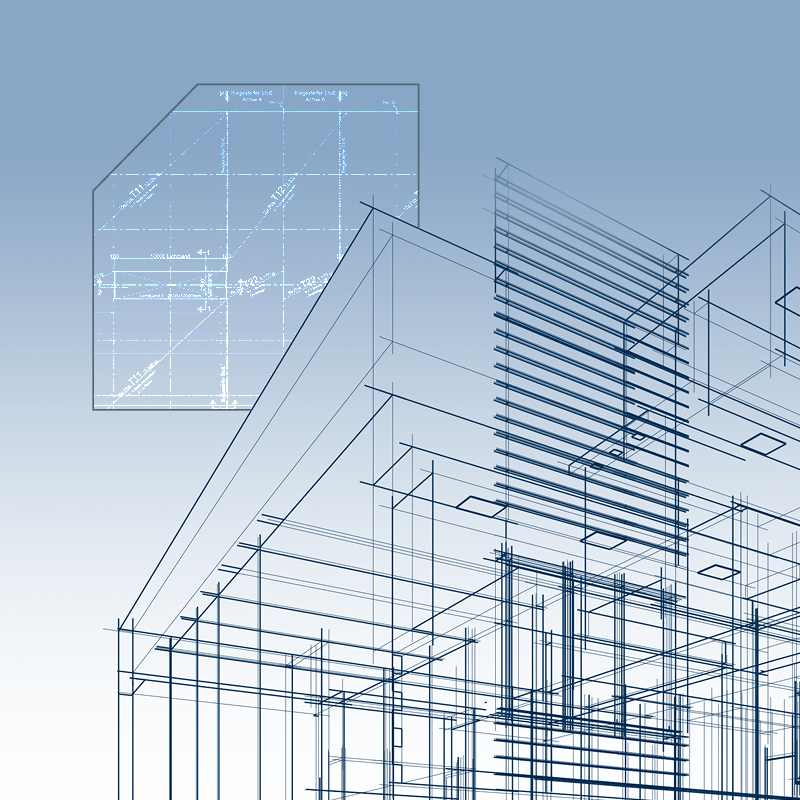
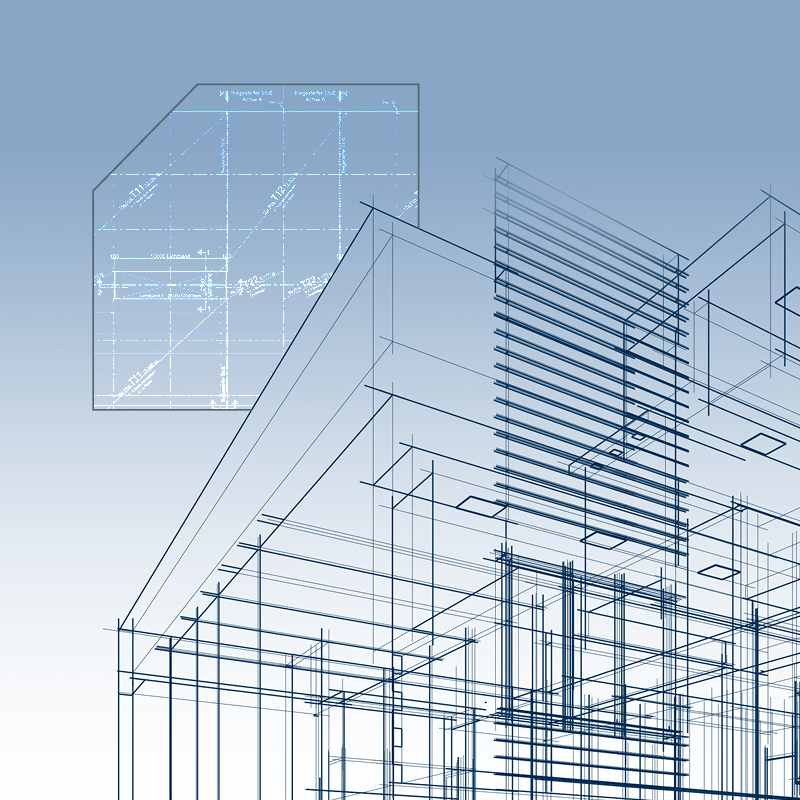
More complex roofs are often designed as so-called multi-span girder systems. These multi-span girder systems are also known as continuous girders and are classed as statically indeterminate systems. Our entire expertise comes into play when calculating these systems. The advantage of continuous beams is that deflection and span moments are usually lower. The effects on the uniform load, roof load and support geometry are enormous, making larger spans possible. Field and bending moments occur in the area of the field centre. The result is a system that enables purlins and other components to be dimensioned more economically and therefore more cost-effectively.
Multi-span girder systems offer considerable design advantages compared to single-span girders:
- Less deflection
- Increased permissible loads for the support geometry
- Reduction of the design moment
- Equally large support moments
Multi-span girder systems can run over any number of supports and have any number of spans. Experience is required for the design: it must be taken into account that the roof load can act in an unfavourable manner in bays, sections or individually. Consequently, loads must be calculated individually for each cross-section. The highest load in each case does not always result from the combination of bay loads with the respective loads such as uniform loads, concentrated loads, etc., but the change in the sign of the influence lines results in the load limits. These do not necessarily have to correspond to the fields.