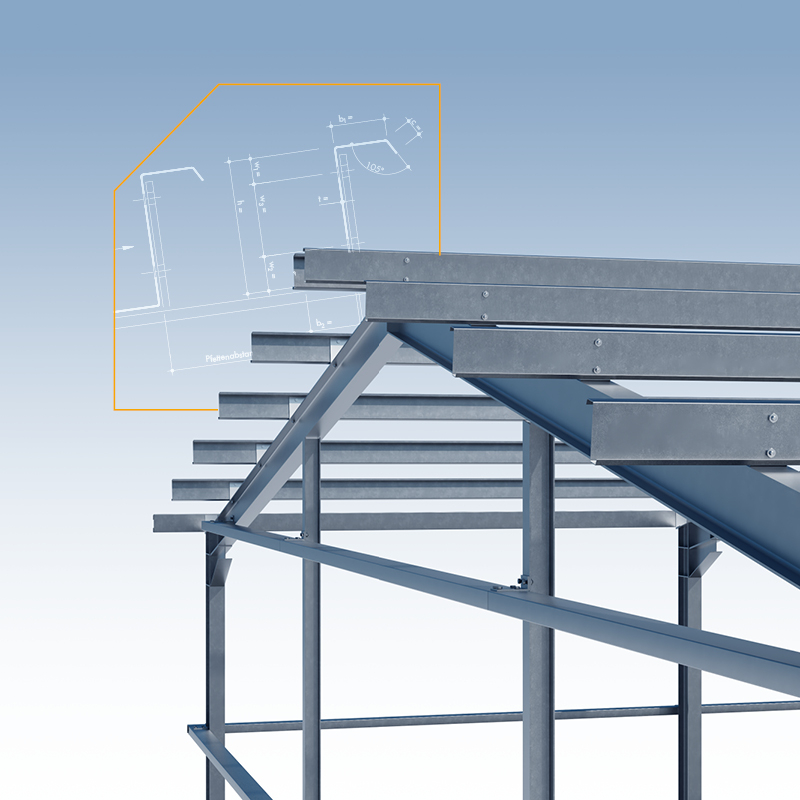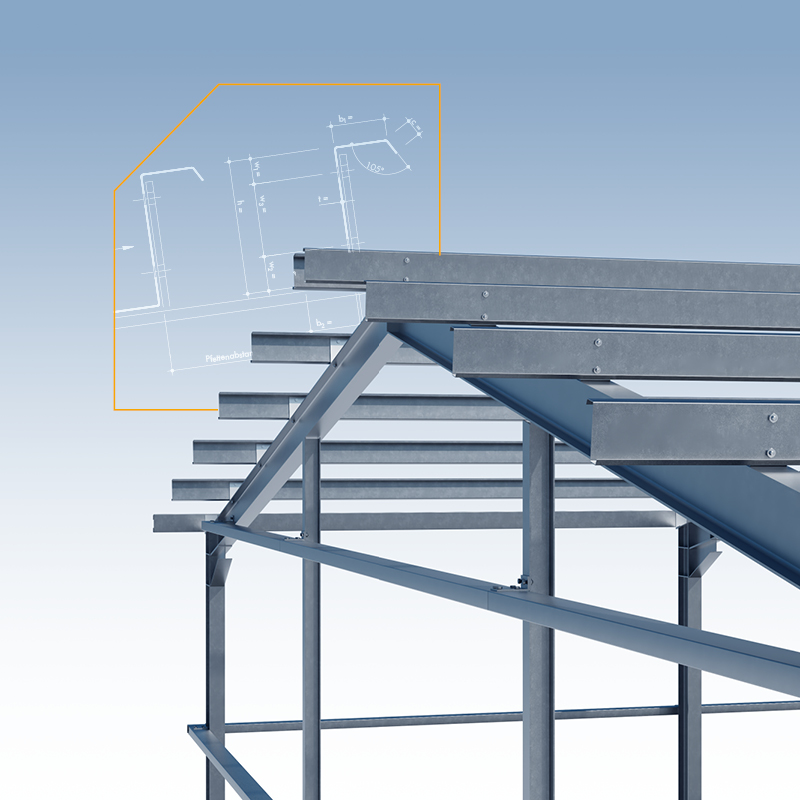
Hot-dip galvanising is a method of protecting steel surfaces from corrosion by creating a protective layer of zinc at a temperature of around 450°C using a hot-dip bath. As the zinc acts as a sacrificial anode, this is referred to as active corrosion protection.
Compared to electrogalvanising, the resulting intermetallic phase of iron and zinc and the protective layer of zinc on top is significantly thicker and therefore more durable.
A distinction is made between discontinuous piece coating for smaller individual parts and continuous strip coating such as a coil (Sendzimir process). The galvanising processes are regulated in several standards: EN ISO 1461 (batch galvanising), DIN 50997 (thin-film galvanising) and EN 10143 and EN 10346 (strip galvanising).
It should be noted that any subsequent mechanical processing of the galvanised part will destroy the existing protective coating and must be re-galvanised accordingly.